
Buying a spray drone in the US right now comes down to an FCC date and what's inside.
Which spray drones can US growers still buy? Check the model's FCC grant date, and since October 13, whose flight controller and radio sit inside it. Two pending FCC proposals could still shrink the list.
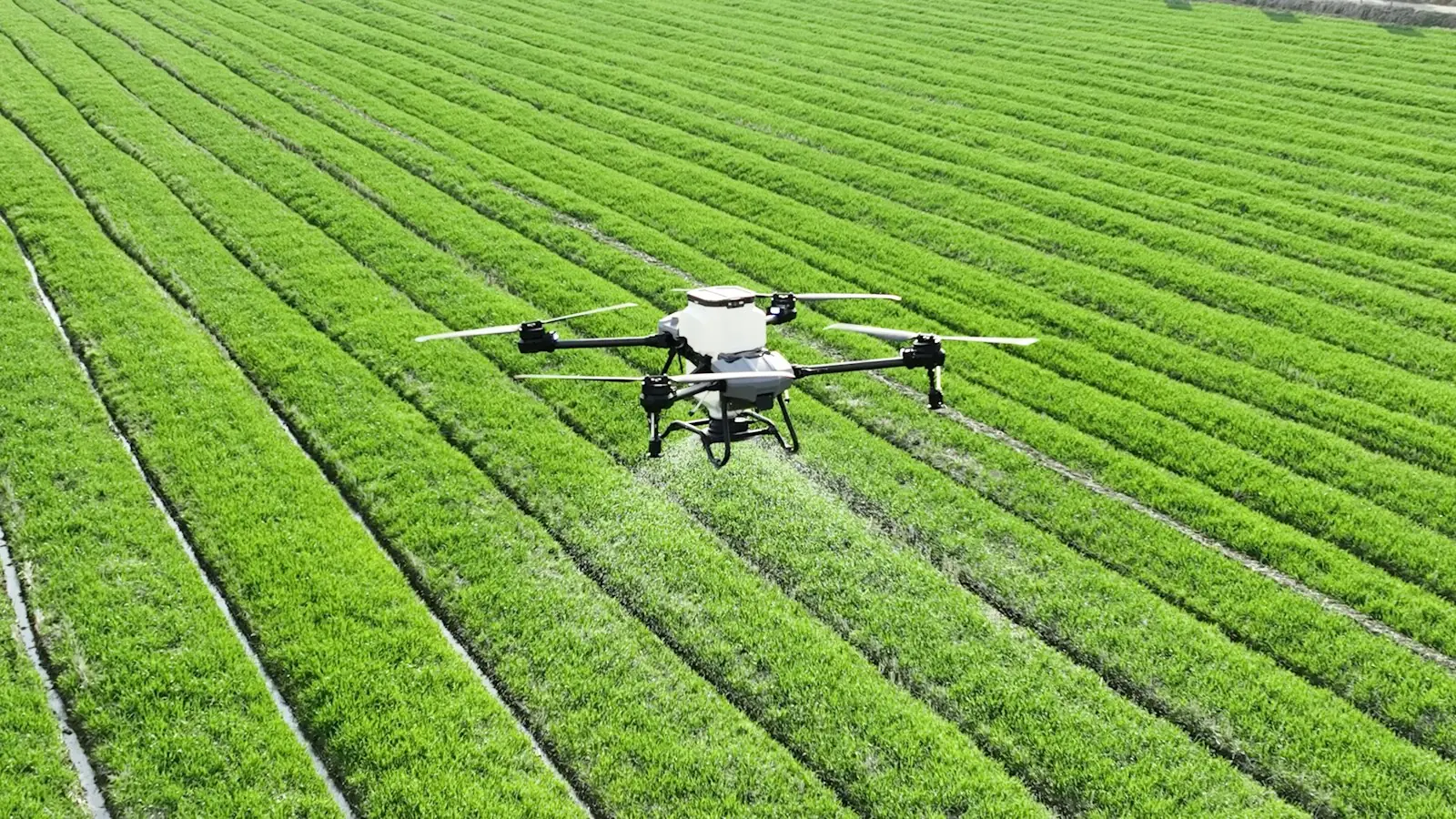
Ask growers about the new federal drone rules and the first question is nearly always which brands got banned. That points at the wrong variable. For spray drones, two things decide whether an aircraft can still be sold new in the US: whether that exact model held an FCC equipment authorization before December 22, 2025, and, since October 13, whose electronics are inside it.
What the FCC actually did
On December 22, 2025, the FCC added foreign-produced drones and drone critical components to its Covered List. It was the first time the list was built around where a product is made instead of who makes it. DJI and Autel were also named in the same action. Anything on the list can't receive a new equipment authorization, which every radio-transmitting device needs before it can be marketed here.
Models that already held an authorization before that date can still be imported, sold and used, as long as they aren't modified in a way that needs a new filing. So the practical test for any sprayer is two lookups: the FCC ID, and the date that ID was granted.
It also means the test isn't "Chinese or not." The listing covers drones produced in any foreign country. A Brazilian or Korean sprayer is fine if its authorization predates the cutoff, and stuck if it doesn't.
The parts rule, now in effect
On October 13, a separate FCC order took effect (Third Report and Order 26-50, ET Docket 21-232). It blocks new authorizations for any device containing a "logic-bearing" component made by a company on the Covered List. That means parts that generate digital timing signals above 9,000 cycles per second or use radio-frequency energy to process or move data. On a spray drone, that's the flight controller, radio link, radar module and camera boards. Frames, tanks, plain motors and battery cells are outside it.
- It names companies, not countries. The analyses we reviewed read it as aimed at parts from entities on the list, such as DJI and Autel. A foreign supplier that isn't named doesn't trigger it on its own.
- It looks forward. Already-authorized aircraft are unaffected, and applications pending on October 13 are grandfathered unless the maker later amends them to change a logic-bearing part.
So "assembled in the USA" doesn't settle anything. A US-built sprayer with a DJI flight controller can't get a new authorization today. For the wider field, see our look at the US spray-drone bench.
What's on the market
- DJI Agras. US dealers are listing the T55 and T100, both authorized before the cutoff. The T55's grant was reportedly issued December 19, 2025. The T70P and T25P appear to sit under authorizations DJI filed for its T70 and T60, but we haven't seen those grant dates confirmed.
- XAG. XAG introduced the P150 Max to US growers on February 4, 2026 and describes it as FCC-approved. We found no US authorization or launch for the P200.
- US-built. Hylio, Revolution Drones, Ceres Air, Exedy and others are building domestically. AgFunder News reported that some were still sourcing motors, radar or batteries from China while shifting production.
Legal to sell isn't the same as easy to service
On July 27, Raptor Dynamic, one of the larger US ag drone distributors, announced it was ending new XAG sales. Its notice cited a difficult first P150 season and shifting FCC rules. Raptor said it will keep supporting XAG aircraft already in the field. Whatever you buy, ask who stocks parts in your state and who does warranty work. It's the same thread as the foreign-drone decision: price continuity, not only acres per hour.
Two proposals still open
Neither is final, and both would reach aircraft authorized before the cutoff.
- "Military-grade" drones (PS Docket 26-189, DA 26-758). The FCC proposes ending continued imports and marketing of foreign-produced Covered List drones in seven capability categories. One is aerosol dispensers, which captures agricultural sprayers. Comments closed September 2 with thousands of filings, the large majority opposed, and as of early October it hadn't been adopted. Reported timelines put the earliest effective date around late January 2027.
- Nine named companies (PS Docket 26-184, DA 26-742). This would stop imports and marketing of equipment from nine companies, XAG among them. Sales would end 30 days after a final order.
Reporting indicates owners could keep using equipment they already bought. But for a 2027 purchase, the list of imported sprayers that are legal to sell may be shorter by spring.
If you already own one
Flying it is still legal. The FCC also issued a waiver so previously authorized drones can keep receiving software and security updates; check the FCC's notice (DA 26-454) for the current end date before you plan around it.
Checklist before you buy
- Get the FCC ID in writing and look up the grant date in the FCC equipment authorization database. Was it before December 22, 2025?
- Ask who makes the flight controller, radio and radar, and whether any of it comes from DJI or Autel.
- Ask where parts inventory and warranty technicians are in your state.
- Ask how a possible sales ban in early 2027 would affect parts and support for aircraft sold now.
We'll update this post as the FCC acts on the pending proposals.
Research basis: FCC public notices DA 25-1086 and DA 26-742, FCC Third Report and Order 26-50 (ET Docket 21-232), as summarized by Akin Gump, Holland & Knight, DroneXL, The Drone U and DroneLife; Raptor Dynamic dealer notice of July 27, 2026; XAG press release of February 4, 2026; AgFunder News. Checked October 16, 2026. Model-level grant dates are secondhand, so confirm the FCC ID with your dealer.
Educational information only, not legal, agronomic or insurance advice. Verify current FAA, EPA, state and label requirements before acting.